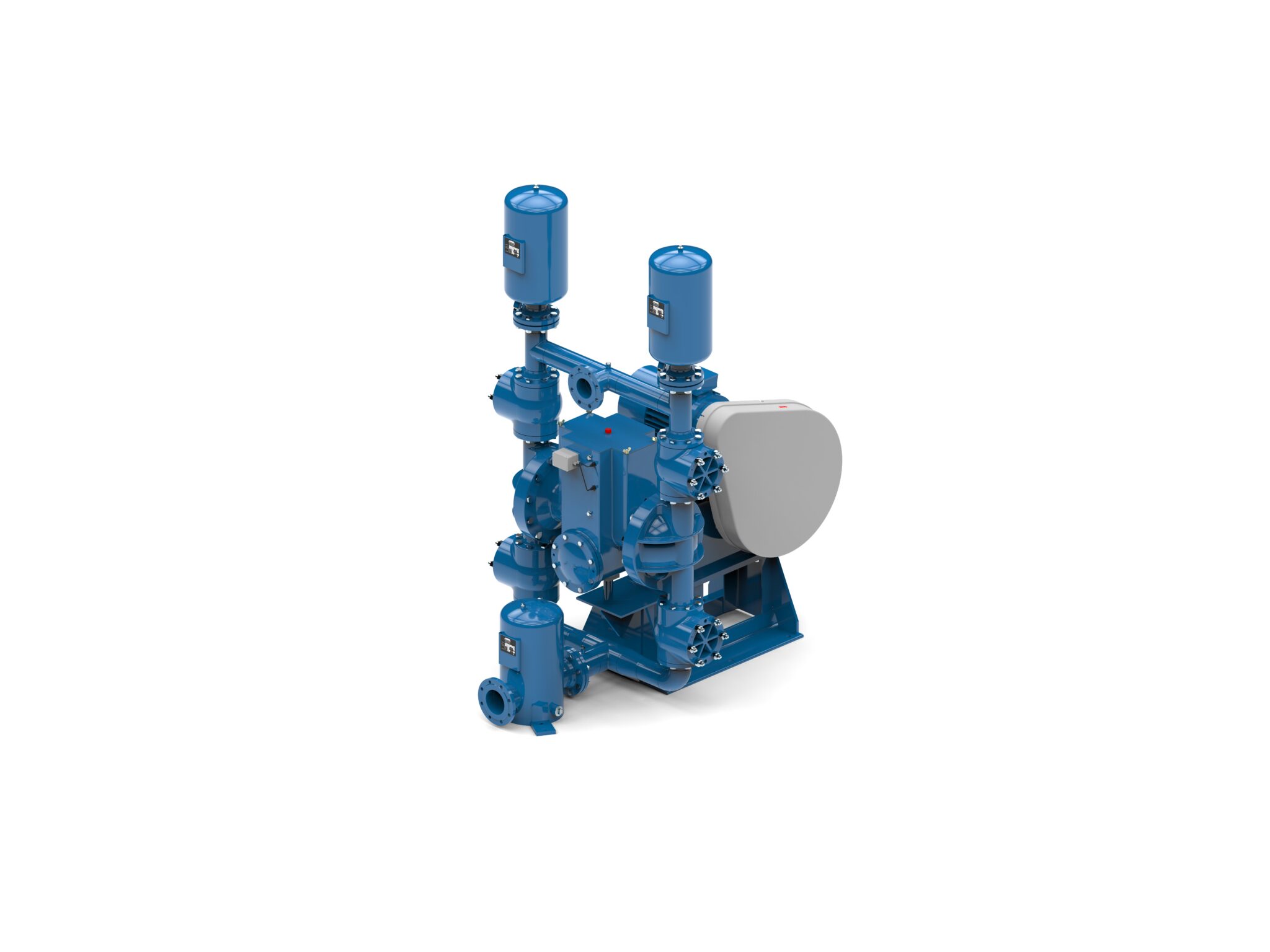
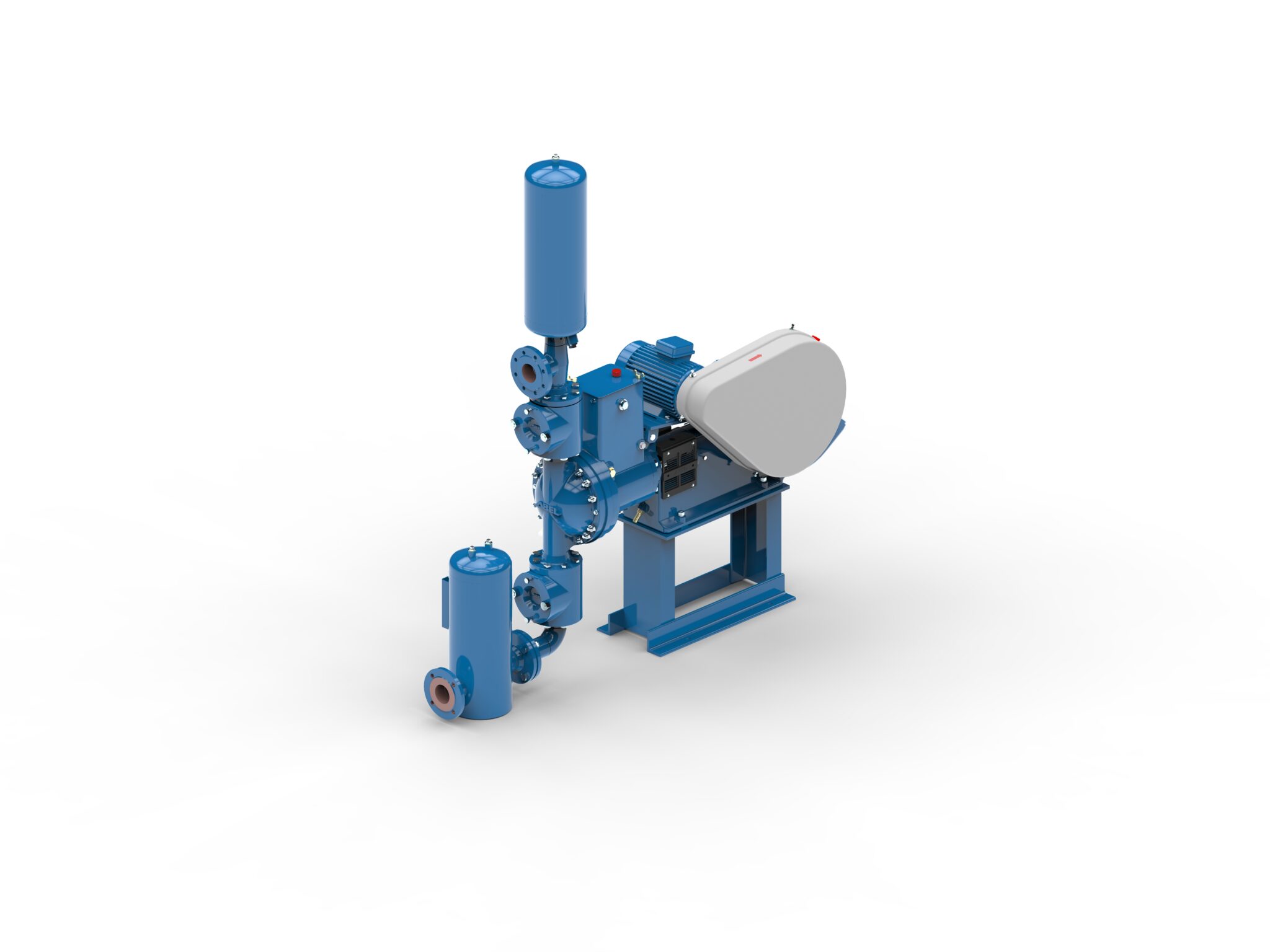
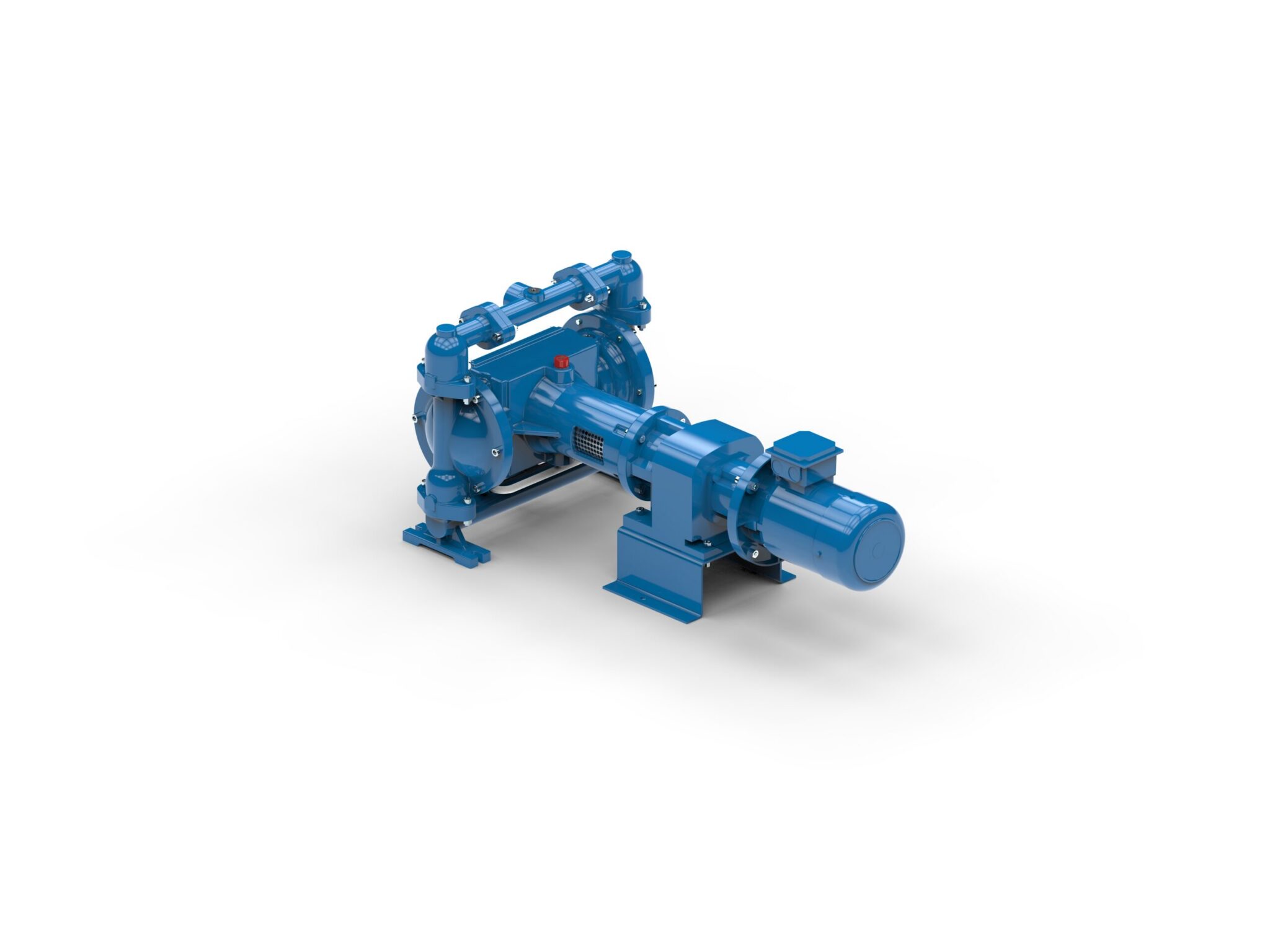
ABEL has decades of experience in feeding filter presses, and our filter press feed pumps have proven themselves thousands of times over in this application. Requirements vary depending on the type of filter press. For chamber filter presses, the pump must generate high pressure to ensure efficient dewatering. When feeding membrane filter presses, the pump is used for filling, while the higher final pressure is generated by the press itself.
Our filter press feed pumps are used worldwide in a wide variety of industries and are equipped with our unique pump monitoring system “Smart Pump Assistant”, which uses AI to continuously analyze and optimize pump operation. This supports efficient filter press feeding with short filtration times, high throughput, and maximum dry matter content in the filter cake.
Piston Diaphragm Pumps as the Ideal Solution for Filter Presses
Piston diaphragm pumps have proven particularly effective for feeding filter presses. They enable:
precise adjustment of the flow rate to the filtration process
the required pressure for efficient dewatering
low-wear operation even with abrasive media
maximum dry matter content in the filter cake
With an optimally matched filter press feed pump, disposal costs can be significantly reduced, as a drier filter cake contains less residual water, thereby lowering disposal costs per ton.
Optimal Feeding with ABEL Pumps for Maximum Filtration Efficiency
A powerful and intelligent filter press feeding system with ABEL pumps is the key to:
ABEL’s AI-powered piston diaphragm pumps offer robust, flexible, and proven solutions for virtually any filter press size – customized to the specific medium, process, and operating conditions.
Control Options at a Glance
Diaphragm stroke control:
Filter Press Feeding with VFD
A particularly flexible and energy-saving solution is filter press feeding with a frequency converter.
Advantages of this control:
An analog pressure transducer detects rising pressurization and transmits the signal directly to the frequency converter. No additional control system is required. This solution is ideal when short filtration cycles, high dry matter content, and maximum process control are required.