HM – Piston Diaphragm Pump

THE Pump for Abrasive Media

Piston diaphragm pumps for abrasive slurries in continuous operation

ABEL’s HM piston diaphragm pumps are designed to handle high flow rates at high operating pressures, even during continuous operation. They thus impress with high performance, reliable operation, and exceptionally low operating and maintenance costs (high overall efficiency, low energy consumption, few wear parts).

The ABEL HM is particularly advantageous for handling abrasive slurries. Combined with our decades of design experience, we achieve service lives that are considered benchmarks in many industries worldwide. The ABEL HM is available with 2, 3, or 4 diaphragm housings—in ABEL abbreviation: HMD, HMT, HMQ.

Up to 410 m³/h (1805 gpm)

Flow Rate

Up to 25 MPa (3625 psi)

Operating Pressure

2, 3 or 4

Diaphragm Housings: HMD, HMT, HMQ

> 1,500

HM Pumps in the Field

The Benefits of the ABEL HM Piston Diaphragm Pump

What sets the HM series apart in continuous operation with abrasive fluids.

Robust Design for Abrasive Slurries

Exceptional service life, even when handling highly abrasive slurries.

Wide Performance Range

Available with 2, 3, or 4 diaphragm housings (HMD, HMT, and HMQ), providing the right pump for any performance requirement.

Low Operating and Maintenance Costs

High overall efficiency, low energy consumption, and minimal wear parts reduce costs throughout the entire service life.

Preformed Diaphragm

The diaphragm is not subjected to any stretching throughout the entire stroke. This ensures low wear and high process reliability.

Decades of Proven Experience

HM series pumps have proven themselves across a wide range of industries worldwide and often remain in operation for several decades.

AI Pump Monitoring

The Smart Pump Assistant monitors the pump around the clock and enables predictive maintenance.

HMD, HMT, and HMQ: the right design for every performance range

The ABEL HM is available with two, three, or four diaphragm housings. All designs use preformed diaphragms and are compatible with the AI-powered Smart Pump Assistant.

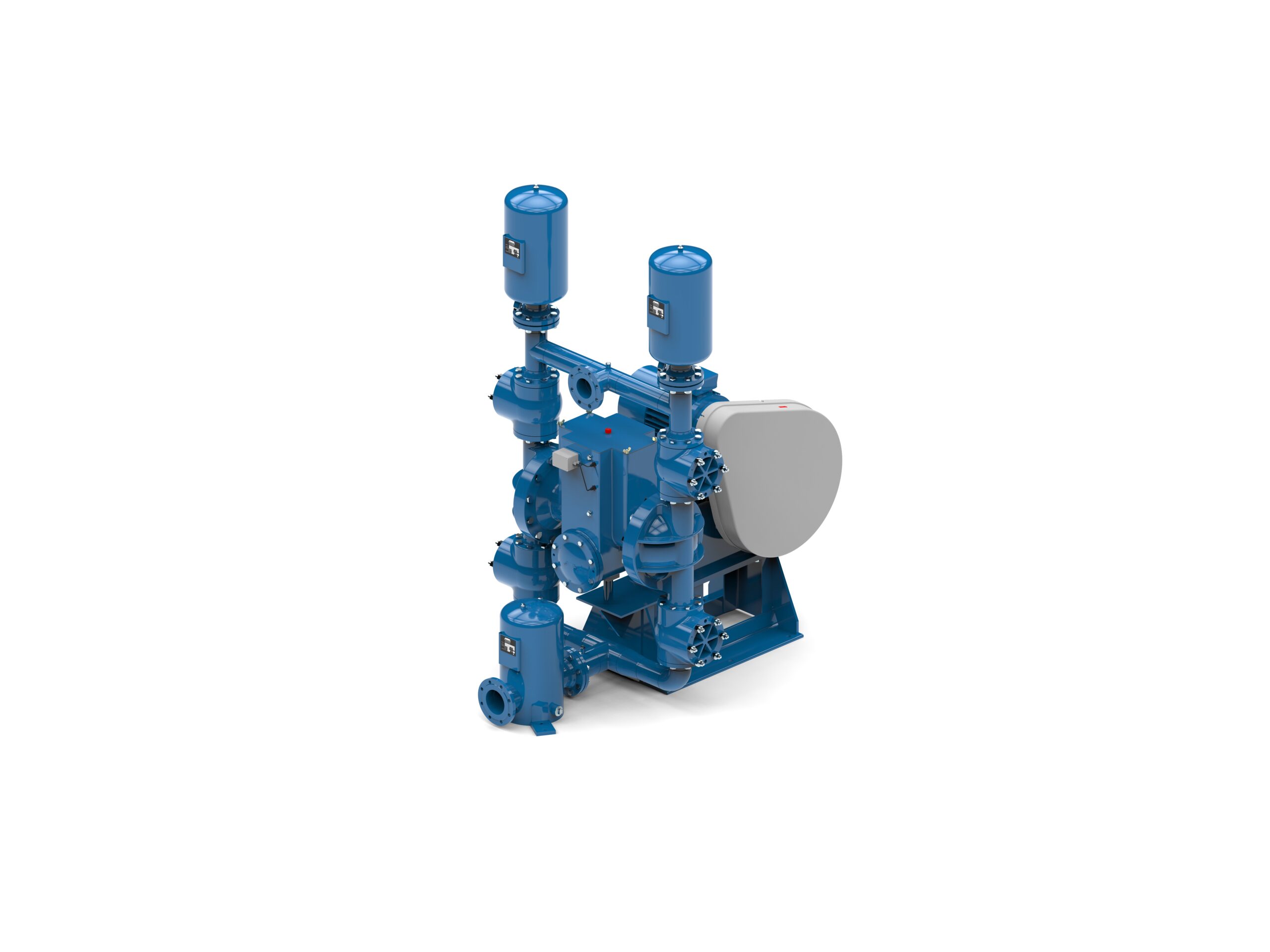
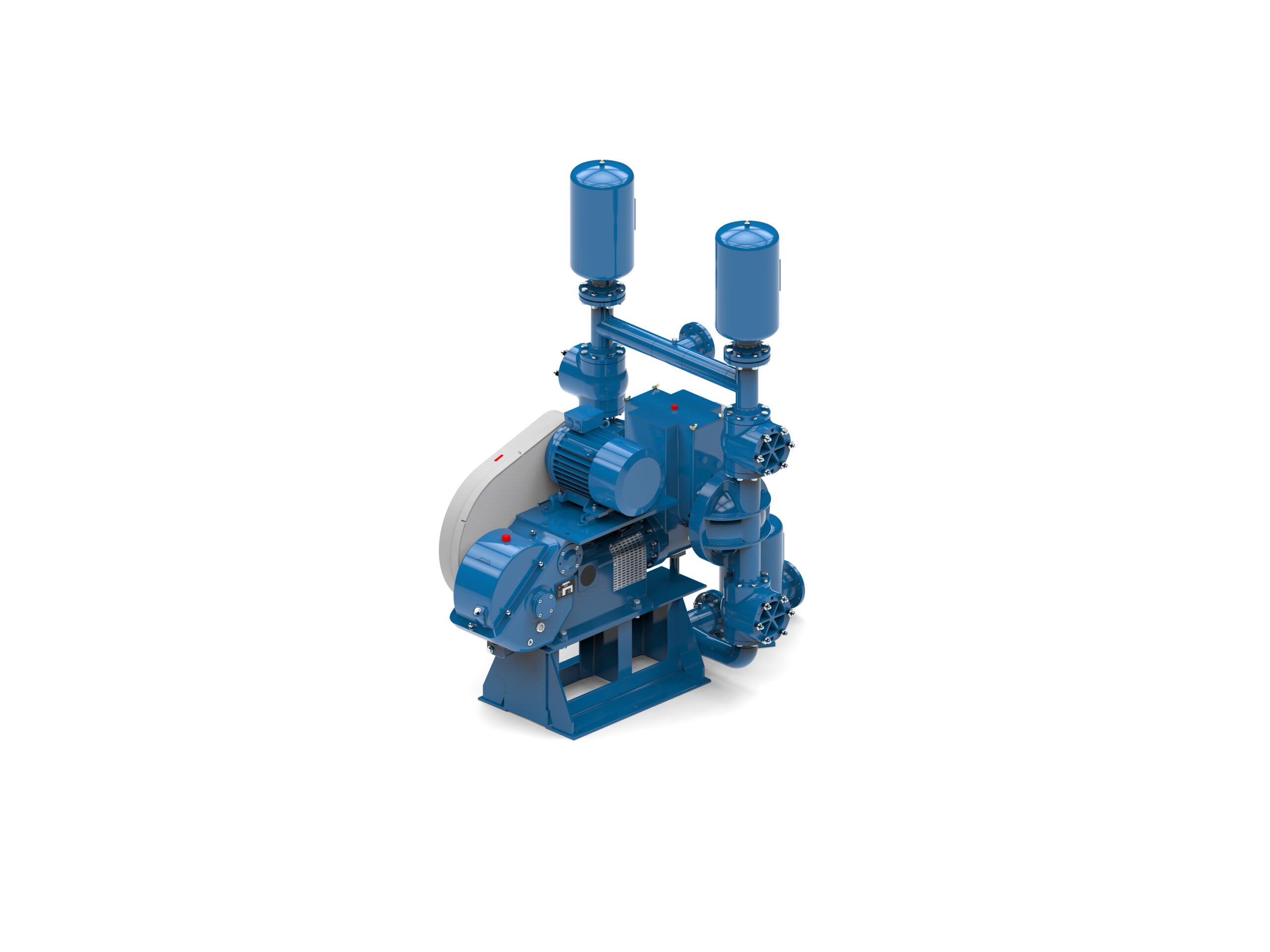
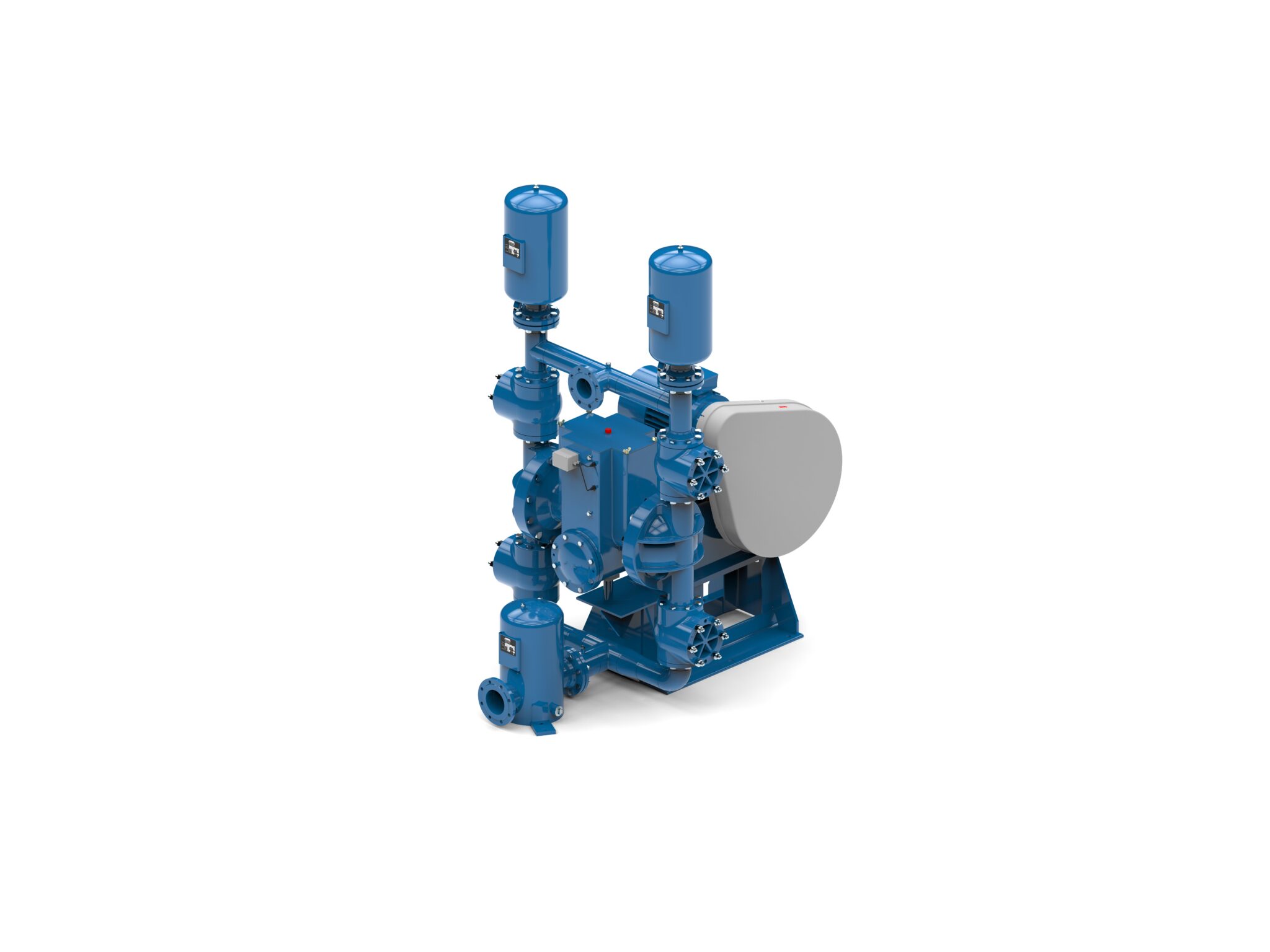
ABEL HMD piston diaphragm pump, left view

HMD Piston Diaphragm Pump

The double-acting HMD is designed for flow rates up to 90 m³/h (400 gpm) and pressures up to 10 MPa (1450 psi). It has been an integral part of the ABEL product line for years and has more than proven its worth: Today, well over 1,000 HMD diaphragm pumps are in service.

Typical applications include feeding filter presses and spray dryers, as well as transporting chemical and electroplating slurries, ceramic slurries, and municipal wastewater. When used as a filter press feed pump, the HMD is controlled via a variable-frequency drive for energy-efficient operation. It is continuously monitored via AI monitoring, and monthly performance reports and maintenance planning recommendations are provided via the app and online portal.

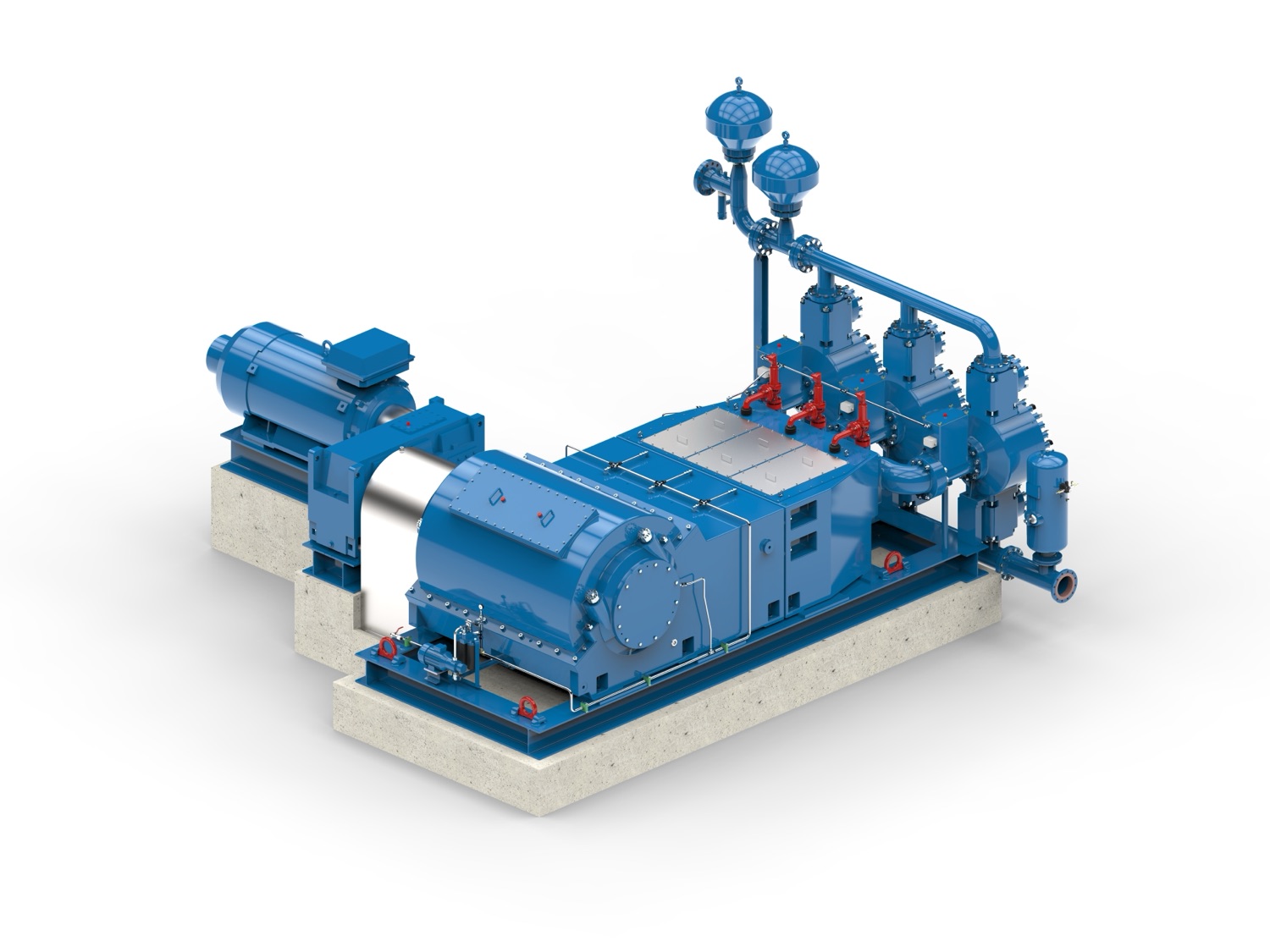
ABEL HMT triplex piston diaphragm pump, left view

HMT Piston Diaphragm Pump

The HMT is a single-acting, slow-speed triplex piston diaphragm pump designed for flow rates up to 210 m³/h (925 gpm). High operating pressures combined with high flow rates place special demands on a pump, especially when handling abrasive fluids. This is why many industries choose an ABEL HMT.

Its strength lies in its smooth operation: The crankshaft has a 120° crank offset, which produces a very uniform flow rate with low residual pulsation. The HMT handles highly viscous ash and mining slurries and serves as an alternative to plunger and piston pumps for the chemical industry, particularly in the lower flow rate range. The Smart Pump Assistant is included as standard.

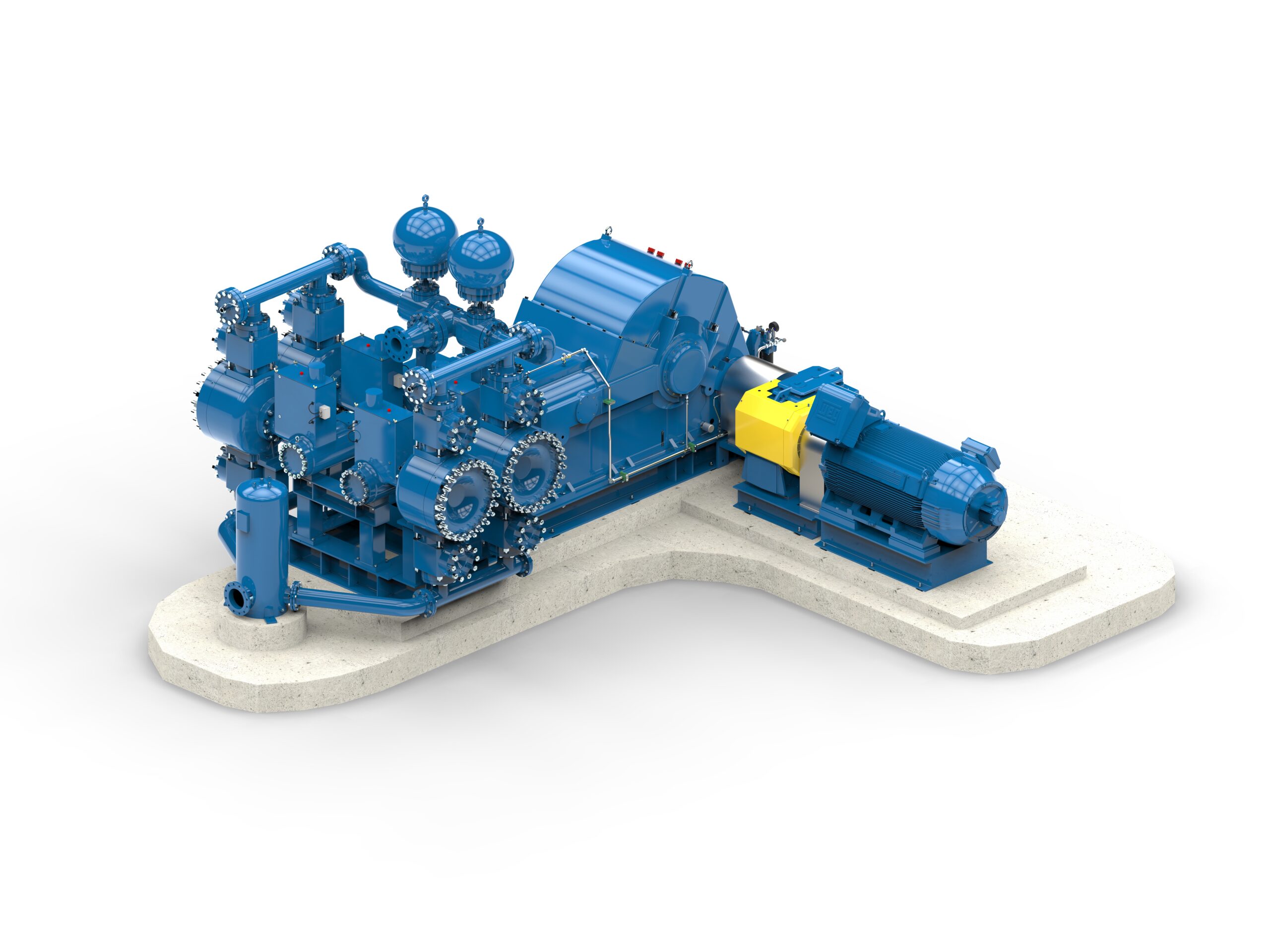
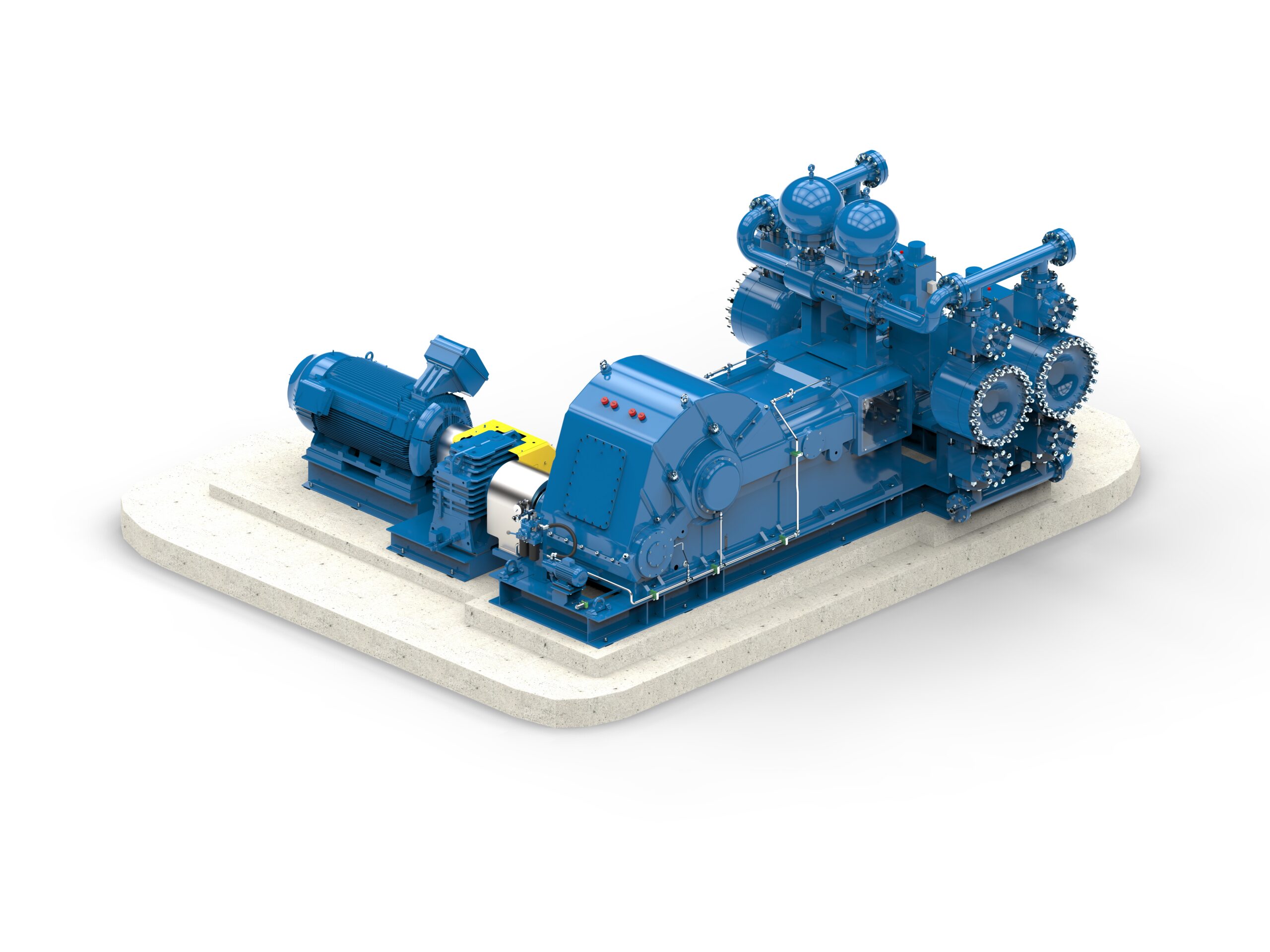
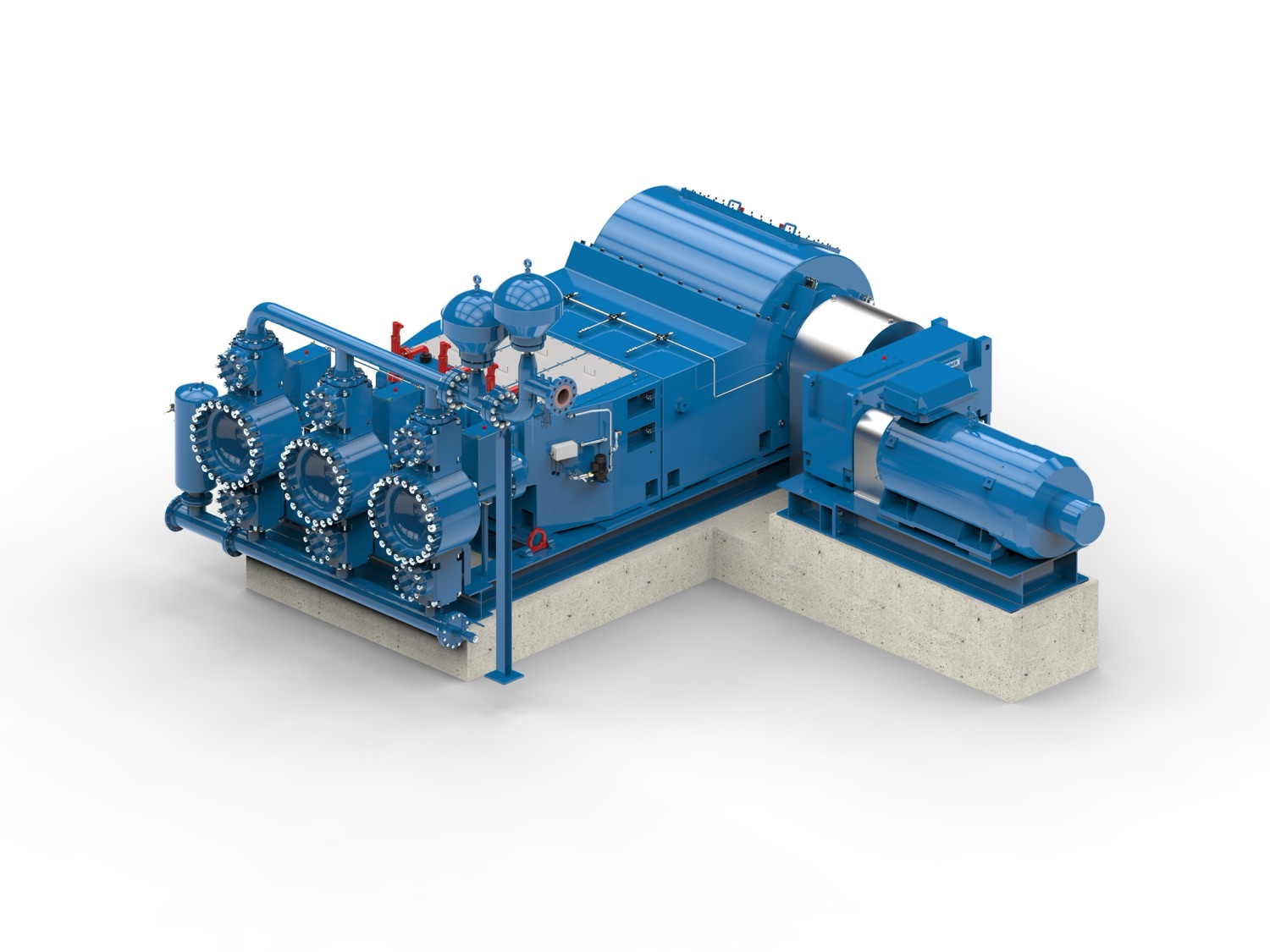
ABEL HMQ piston diaphragm pump, left view

HMQ Piston Diaphragm Pump

The HMQ features four preformed diaphragms and is designed for higher performance ranges than the HMD and HMT. It is used to pump large volumes of abrasive media at high operating pressures—primarily slurries with a high mineral content, such as fly ash slurry in power generation or tailings in mining.

From tailings management to mine dewatering and backfilling, mines worldwide rely on the HMQ because it operates reliably and offers protection against downtime. With AI pump monitoring, wear-related failures are detected up to 21 days in advance.

Comparison of HMD, HMT, and HMQ

Scroll left and right

Comparison of the HMD, HMT, and HMQ Piston Diaphragm Pumps
FeatureHMDHMTHMQ
TypeDuplexTriplexQuadruplex
Diaphragm Housings234
Max. PressureUp to 10 MPa (1450 psi)Up to 25 MPa (3625 psi)Up to 25 MPa (3625 psi)
Max. Flow RateUp to 90 m³/h (400 gpm)Up to 210 m³/h (925 gpm)Up to 410 m³/h (1805 gpm)
Weightapprox. 1,400 to 3,500 kgup to 39 tup to 60 t
Fluid Temperature−20 °C to 100 °C, PP housing up to 60 °C−20 °C to 100 °C−20 °C to 100 °C
Valve TypesBall valve, cone valve, reverse cone valveCone valve, reverse cone valveBall valve, cone valve, reverse cone valve
Diaphragmpreformedpreformedpreformed
ATEXYesNoNo
AI Pump MonitoringYesYesYes

How a Piston Diaphragm Pump Works

A hydraulically driven piston moves the diaphragm, which completely isolates the fluid being pumped from the drive mechanism. The principle in three steps, illustrated using the HMD as an example—also shown in the video.

Video: How the ABEL HMD Piston Diaphragm Pump Works

1. Suction Stroke

The piston and diaphragm move from the center position to the rear end point. The volume displaced by the piston is compensated by the diaphragm, allowing the fluid to flow in through the suction valve, which is opened by the vacuum. The discharge valve is closed.

2. Discharge Stroke

At the start of the discharge stroke, the piston displaces the hydraulic fluid from the cylinder chamber, causing the hydraulic fluid to push the diaphragm into the pump chamber. The product to be pumped is forced through the open discharge valve. The suction valve is closed.

3. Diaphragm Control

The preformed diaphragm is not subjected to any stretching during the entire stroke. Diaphragm control and monitoring further ensure maximum safety.

Pump Monitoring with Artificial Intelligence

The Smart Pump Assistant monitors pump parameters and pump health around the clock. It automatically notifies the operator in the event of errors, provides troubleshooting instructions, and enables predictive maintenance.

21 days

advance warning of wear-related failures

48 h → 3 h

reduced maintenance time thanks to detailed pump health insights

Up to 25 %

lower operating costs through predictive maintenance

Technical Specifications and Materials

Key specifications for the HM at a glance, including available material options.

Technical Specifications at a Glance

Pump Technology

Piston diaphragm pump (oscillating positive displacement pump)

Types

Duplex (HMD), Triplex (HMT), Quadruplex (HMQ)

Max. Flow Rate

HMD up to 90 m³/h (400 gpm), HMT up to 210 m³/h (925 gpm), HMQ up to 410 m³/h (1805 gpm)

Max. Pressure

HMD up to 10 MPa (1450 psi), HMT and HMQ up to 25 MPa (3625 psi)

Fluid Temperature

−20 °C to 100 °C, with a polypropylene housing up to 60 °C

Max. Particle Size

more than 20 mm, depending on the pump size and valve type

Diaphragm

Preformed diaphragms, with no stretching over the entire stroke

Valve Types

Ball valve, cone valve, reverse cone valve

Control

VFD

ATEX

HMD upon request

AI Pump Monitoring

Smart Pump Assistant for all models

Installation Site

Indoors and outdoors (outdoors with weather protection)

Documents for the HM

Flyers and complete dimension tables available for download.

Materials

Scroll left and right

¹ with steel core
Technical evaluation required: The choice of material depends, among other factors, on temperature and the medium—not all combinations are practical or feasible in real-world applications.

Dimensions and Weights

Overview of selected sizes. The complete dimension tables are available as a PDF. We will provide you with the dimensions and weights of the HMT upon request.

ABEL HM piston diaphragm pump, steel version, side view
ABEL HM piston diaphragm pump, steel version, front view

Scroll left and right

Dimensions and Weights – HMD Metal Version
SizeHMD-0125HMD-0250HMD-0500HMD-1000
Max. Flow Rate [m³/h]18.032.055.070.0 / 90.0*
Max. Flow Rate [gpm]79140242308 / 396*
Max. Pressure [MPa]101042.5
Max. Pressure [psi]1,4501,450580362
Suction Connection [DN] / [ANSI]80 / 3″125 / 5″125 / 5″150 / 6″
Discharge Connection [DN] / [ANSI]65 / 2 ½″80 / 3″100 / 4″150 / 6″
L1 [mm]1,6753,1803,7004,155
B [mm]1,1151,1771,4301,595
H [mm]1,8101,6102,1902,905
Weight approx. [kg]6901,5802,4004,200
Weight approx. [lbs]1,5203,4855,2909,260

L1 = Length with suction flow stabilizer (HMD-0125 without suction flow stabilizer: 1,305 mm).
*As filter press feed pump
Other models available upon request.

ABEL HM piston diaphragm pump, polypropylene version, side view
ABEL HM piston diaphragm pump, polypropylene version, front view

Scroll left and right

Dimensions and Weights – HMD Polypropylene Version
SizeHMD-0250HMD-0500
Max. Flow Rate [m³/h]2545
Max. Flow Rate [gpm]110198
Max. Pressure [MPa]1.6*1.6*
Max. Pressure [psi]232*232*
Suction Connection [DN]100100
Discharge Connection [DN]100100
L [mm]1,8272,265
B [mm]1,4511,609
H [mm]2,5302,590
Weight approx. [kg]1,0251,900
Weight approx. [lbs]2,2604,190

*Up to 40 °C. Other models available upon request.

Dimensional drawing of the ABEL HMQ piston diaphragm pump, left side view
Dimensional drawing of the ABEL HMQ piston diaphragm pump, front view

Scroll left and right

Dimensions and Weights – HMQ
SizeHMQ-250-1000HMQ-400-2000HMQ-640-2000
Max. Flow Rate [m³/h]140280250
Max. Flow Rate [gpm]6161,2321,100
Max. Pressure [MPa]141620
Max. Pressure [psi]2,0302,3202,900
Discharge Connection [DN] / [ANSI]150 / 6″150 / 6″150 / 6″
L [mm]6,4357,5658,548
B [mm]2,9213,3624,036
H [mm]3,6883,6453,897
Weight approx. [t]304060

Overview of selected sizes; other models available upon request. Dimensions do not include the drive side (motor, intermediate gearbox); weight does not include the hopper, pulsation damper, or control cabinet.

Real-World Examples: HM Piston Diaphragm Pumps in Action

How operators in wastewater and sludge applications, as well as in the mining industry, use the HM series.

HMD · Water and Wastewater

Raw Sewage Transport at the Pumping Station

At our customer’s wastewater pumping station, raw sewage is transported to the wastewater treatment plant via a pressure line approximately 500 meters long, with a vertical rise of more than 60 meters. For many years, two ABEL HMD piston diaphragm pumps have been performing this task, flexibly adjusting their flow rate to the wastewater volume via frequency converters. Maintenance is limited to a few wear parts, and the pumping station operates virtually unmanned.

HMD · Filter Press Feeding

Filter Press Feeding in Soil Treatment

At a French customer’s site, treated soil and sludge are dewatered using membrane filter presses. Two ABEL HMD units feed the presses at a rate of up to 80 m³/h at 12 bar. The Smart Pump Assistant continuously monitors the pumps and optimizes the filtration process, resulting in higher productivity and lower energy and operating costs.

HMQ · Mining

Mine Backfilling: Maintenance in 3 Hours Instead of 48

With AI-powered pump monitoring, we detect wear up to 21 days in advance, optimize maintenance planning, and prevent unplanned downtime so that critical processes—such as backfilling—are not interrupted. Precise information also shortens maintenance time: in practice, from 48 hours to just 3 hours with monitoring.

Request the Field Reports

Please fill out the form. We will then send you the field reports via email.

Request the full field report now:

Frequently Asked Questions About the HM Piston Diaphragm Pump

The three models differ in the number of diaphragm housings and, consequently, in their performance range. The HMD (duplex, 2 diaphragm housings) delivers up to 90 m³/h (400 gpm) at up to 10 MPa (1450 psi), the HMT (triplex, 3 diaphragm housings) up to 210 m³/h (925 gpm), and the HMQ (quadruplex, 4 diaphragm housings) up to 410 m³/h (1805 gpm), with both the HMT and HMQ operating at up to 25 MPa (3625 psi). All three models use preformed diaphragms and can be monitored using the Smart Pump Assistant.

ABEL piston diaphragm pumps are generally manufactured to order. Some HMD piston diaphragm pumps have relatively short lead times of approximately 10 weeks ex-works. The lead time for HMT/HMQ pumps is significantly longer. Spare parts are usually available from stock.

General: The product must be free-flowing and must not settle within the pump.

pH value: There are no fixed pH limits for specific materials. However, a compatibility test is possible if, in addition to the pH value (or alternatively the concentration), the type of acid or base is known. Temperature also plays a very significant role in the compatibility of materials.

Temperature: up to 100 °C in the metal version, up to 60 °C for pumps with polypropylene housings.

Particle sizes: The maximum particle sizes range up to >20 mm depending on pump size and valve type. The maximum particle sizes refer to diameter. Long, fibrous solids may exceed the aforementioned values.

We would be happy to check for you whether the HM piston diaphragm pump can reliably handle your product.

HMD:

  • Housing: Nodular cast iron, stainless steel, rubber-lined, polypropylene
  • Diaphragms: NBR, HNBR, TPE, FPM, PTFE, EPDM
  • Valve balls: PU¹, AU¹, EPDM¹, FPM¹, PTFE¹, PP filled, steel, stainless steel
  • Cone valves: Steel, stainless steel, PU seal
  • Valve seats: Polyurethane, UHD-PE, steel, stainless steel

HMT and HMQ:

  • Housing: Nodular cast iron, stainless steel, rubber-lined (HMT only)
  • Diaphragms: NBR, HNBR
  • Valve balls (HMQ only): PU¹, AU¹, EPDM¹, FPM¹, PTFE¹, PP filled, steel, stainless steel
  • Cone valves: Steel, stainless steel, hardened cast iron, PU seal
  • Valve seats: Steel, stainless steel, hardened cast iron

¹ with steel core

Yes, in principle, pumps can be used both indoors and outdoors. However, certain aspects must be considered, which are already important during the design phase of the pumps. Especially for outdoor use, additional protection against direct weather exposure is required, and the motor must be suitable for the temperature range.