


APPLICATIONS
Spray Dryer Feeding
Efficient Feeding for the Highest Product Quality
Spray dryer feeding is a critical process step in industrial processes. It significantly determines the product quality, process stability, and economic efficiency of the entire plant. Whether ceramic slurries, detergents, chemical suspensions, or highly abrasive slurries – consistent, low-pulsation, and reliable feeding of the spray dryer is essential.
The spray drying process is used in a wide range of industries and processes, such as the manufacture of ceramics, polymers, dyes, detergents, chemical products, etc. ABEL piston diaphragm pumps have proven themselves worldwide as high-performance feed pumps for spray dryers and enable safe 24/7 operation.
Process Description of Spray Drying
Spray dryer feeding refers to the controlled conveyance of liquid media, suspensions, or slurries from the feed tank to the spray nozzle of the spray dryer. The medium is introduced into the hot air stream at a defined pressure and constant flow rate through spray atomizing nozzles (7), where it dries into powder or granules within a very short time. The hot air can flow in the same direction as the spray jet or against it (co-current or counter-current principle), depending on the design or intended use. The spray device is located at the top of a spray tower. The resulting dry product is usually separated from the air stream by a cyclone separator (9) and can be removed after the cyclone hopper (10), e.g., via a conveyor (12). Otherwise, the dried solid falls to the lower part of the spray tower and lands on the conveyor (12) via the discharge valve (8) and vibration screen (11). Spray dryers can be operated continuously or discontinuously depending on the production process.
Precise feeding is crucial for:
uniform droplet size
constant residual moisture

reproducible granule quality
minimal reject rates

ABEL Piston Diaphragm Pumps for Feeding Spray Dryers
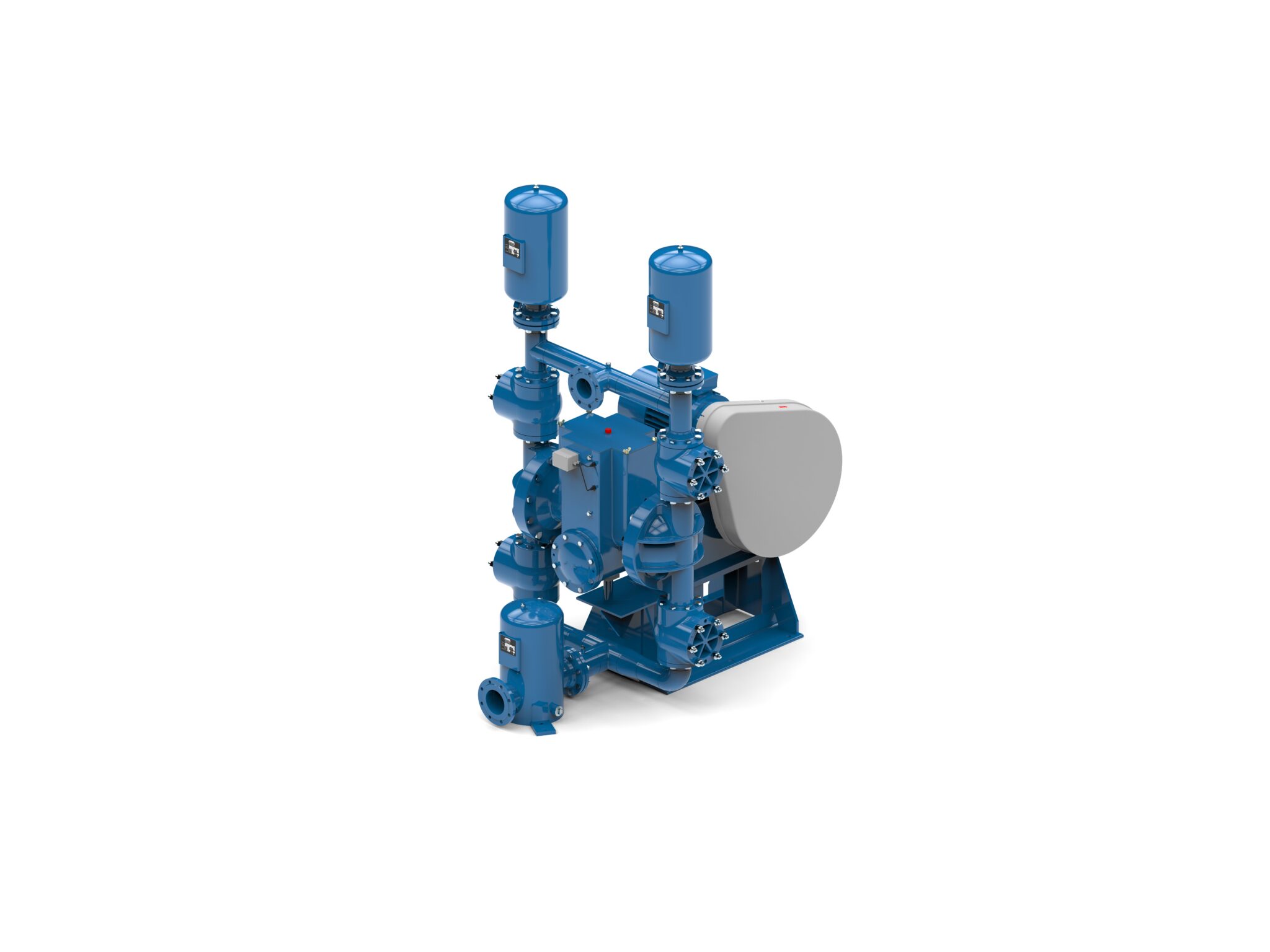
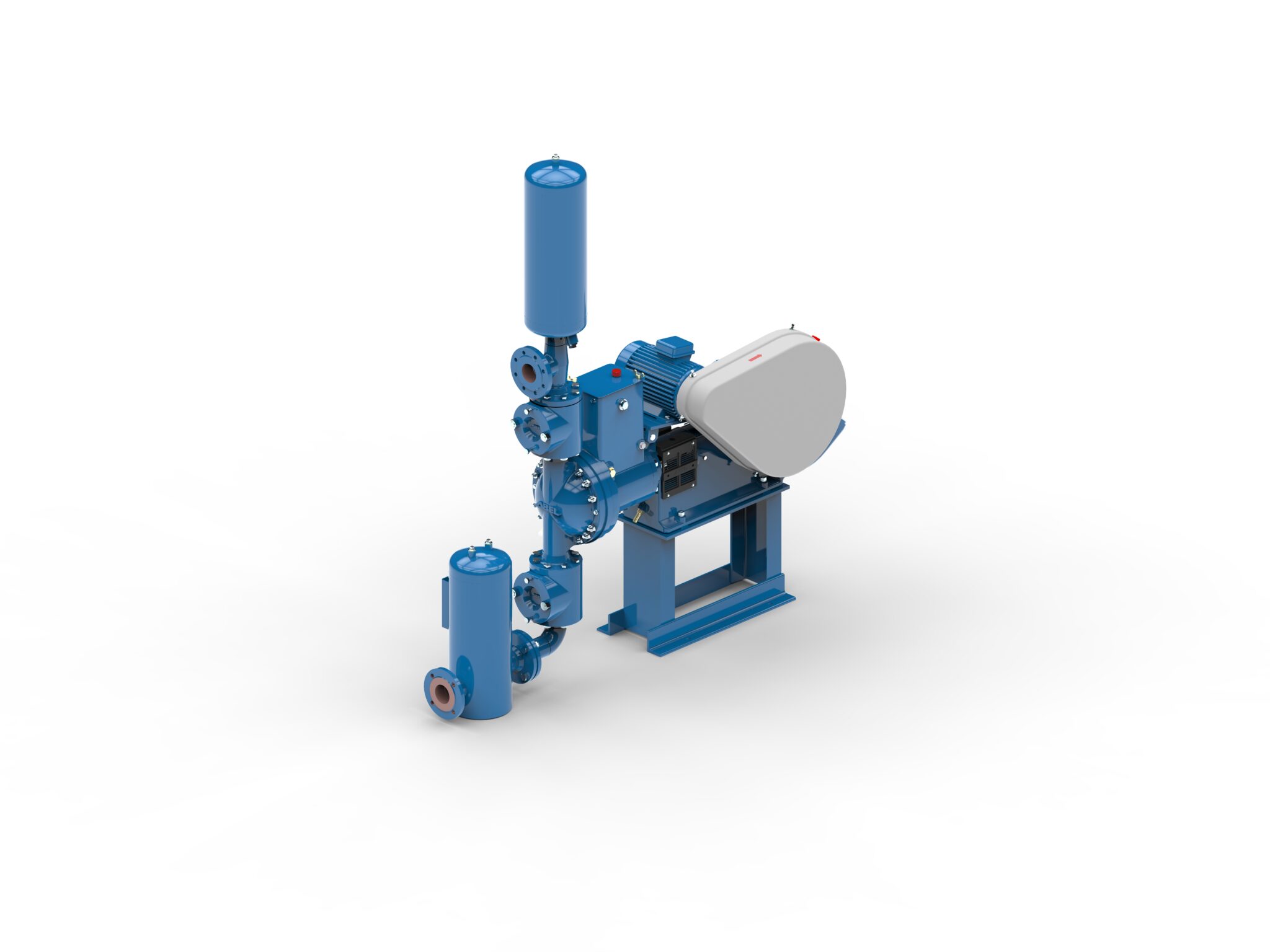
ABEL compact diaphragm pumps (CM) and hydraulic piston diaphragm pumps (HM), equipped with our intelligent AI-powered pump monitoring, can handle the demanding feeding task and have proven themselves worldwide in this application.
Pumps suitable for this application
Flexible adaptation to changing process and product characteristics
Another feature is adaptation to changing production processes; i.e., operating conditions (flow rate, pressure) as well as product properties (density, solids content, viscosity, temperature). This allows the pump to be adapted to different formulations of the products manufactured by the company. The use of a large-volume pulsation damper reliably prevents unwanted pulsation, ensuring a continuous and uniform discharge of the pumped medium across the entire pressure range.
Pumps in the CM and HM series operate with extremely low wear due to a low stroke rate per minute and suitable materials for diaphragms and ball valves. In addition, the diaphragm prevents contact between the medium and the piston as well as other mechanical control and regulating elements of the pump.
ABEL Advantages for Spray Dryer Feeding:
- Reliable spray dryer feeding in 24/7 operation
- Low-wear pumping of abrasive suspensions
- Constant flow rate independent of spray pressure
- Frequency-controlled drive for optimal adaptation to the process
- Low energy consumption
- AI pump monitoring for continuous pump monitoring and maximization of pump availability
ABEL – Pumps for even spray tower feeding
Requirements for Pump Technology in the Feeding of Spray Dryers
In practice, spray tower feeding places particularly high demands on the pump system:
- Wear resistance, as media are typically highly abrasive
- Constant flow rates must be maintained
- Suitability for 24/7 operations
Advantages of ABEL Piston Diaphragm Pumps over Vertical Piston Pumps
Compared to conventional vertical piston pumps, ABEL piston diaphragm pumps offer clear advantages, especially during continuous operation:
- No cylinder wear caused by abrasive media
- Significantly lower pulsation
- Faster replacement of wear parts (The AI pump monitoring system “Smart Pump Assistant” provides precise maintenance instructions and optimizes maintenance schedules)
- The result: higher system availability, lower operating costs, and consistent product quality.
