APPLICATIONS
Incinerator Feed with Pumps
Feeding (Mono)-Incinerators
Reliable feeding of mono-incineration plants is a key factor for stable, economical, and low-emission operation. These incinerators are typically fed with mechanically dewatered sewage sludge, which places special demands on the conveying technology due to its rheological properties. Modern pump systems enable continuous, controlled, and automated feeding of the sludge into the incinerator.
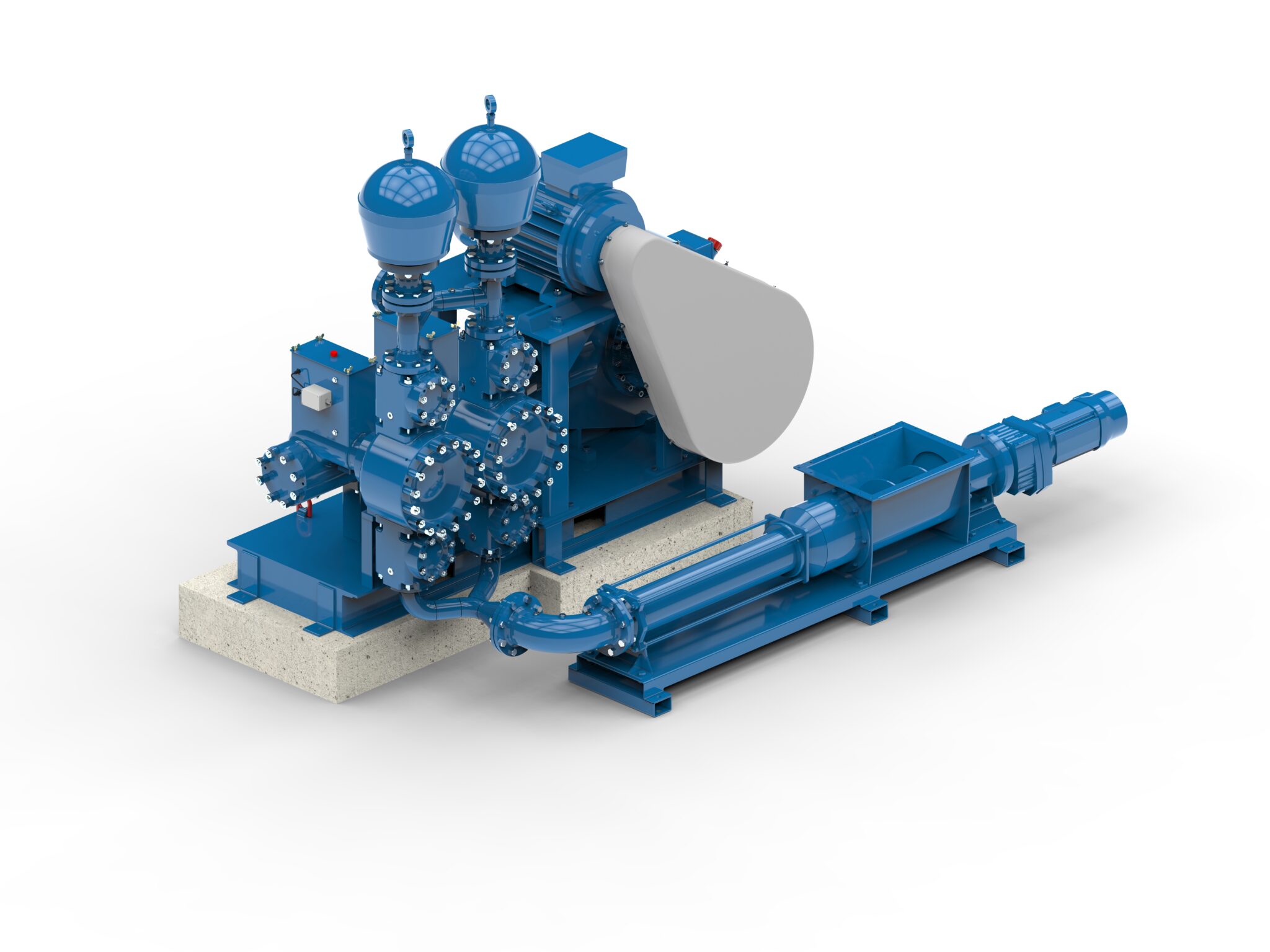
Mono-Incineration with ABEL’s Solids Diaphragm Solution (SDS)
After mechanical dewatering (e.g., using a decanter), the sewage sludge typically has a solids content of 20–30 %. In this state, it is pasty to highly viscous and may exhibit thixotropic properties. The SDS slurry pump can reliably convey the dewatered sewage sludge, ensuring a continuous flow during incinerator feed and thereby reducing temperature fluctuations.
Since this is a closed pumping system, odor, dust, and emission releases are minimized compared to open mechanical conveying systems.
Pumps suitable for this application
Request the Field Report
- Use at a wastewater treatment plant: incinerator feeding with dewatered sewage sludge
Please fill out the form. We will then send you the field report via email.
Request the full field report now:
Advantages of the SDS Solids Pump over Hydraulic Piston Pumps
Up to 80 % lower operating costs due to shorter maintenance times, reduced spare part consumption, and longer maintenance intervals
Higher process reliability thanks to AI-powered pump monitoring “Smart Pump Assistant”
Less wear, as only a few components come into contact with the sludge
Pump technology without complex hydraulics simplifies maintenance
Feeding Rotary Kilns
In cement plants, the rotary kiln is usually the heart of production. Depending on the location and product range, limestone marl, chalk, or limestone sand is fed into the kiln. At temperatures above 1400°C, the raw material is melted down to produce what is known as cement clinker. Rotary kilns can reach lengths of over 100 m and diameters of up to 5 m. The kilns are often fired with bituminous coal. In recent years, however, the use of alternative fuels has become increasingly common. In addition to animal meal, these include used oils and solvents as well as sewage sludge.
Feeding Rotary Kilns with Piston Diaphragm Pumps
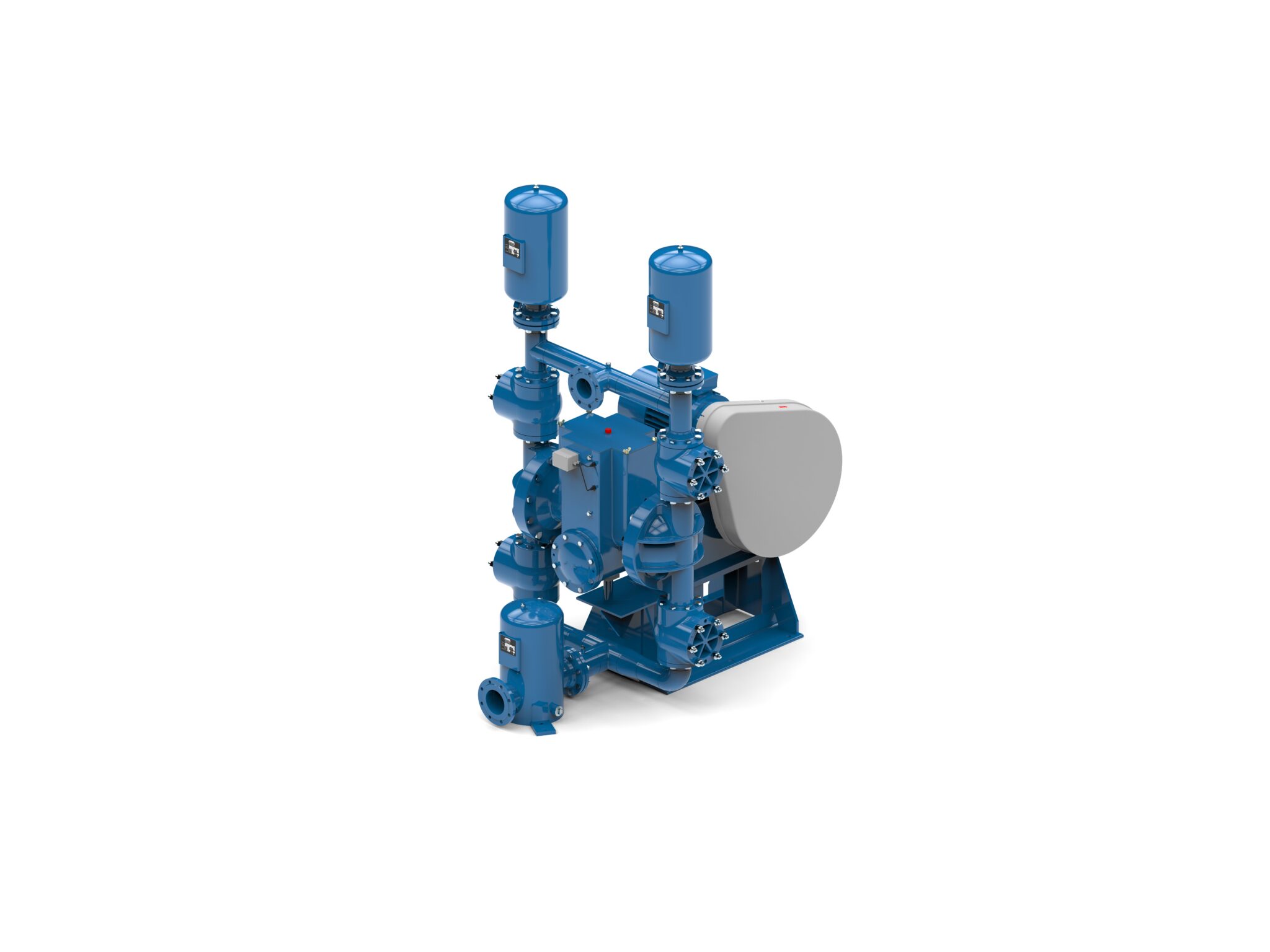
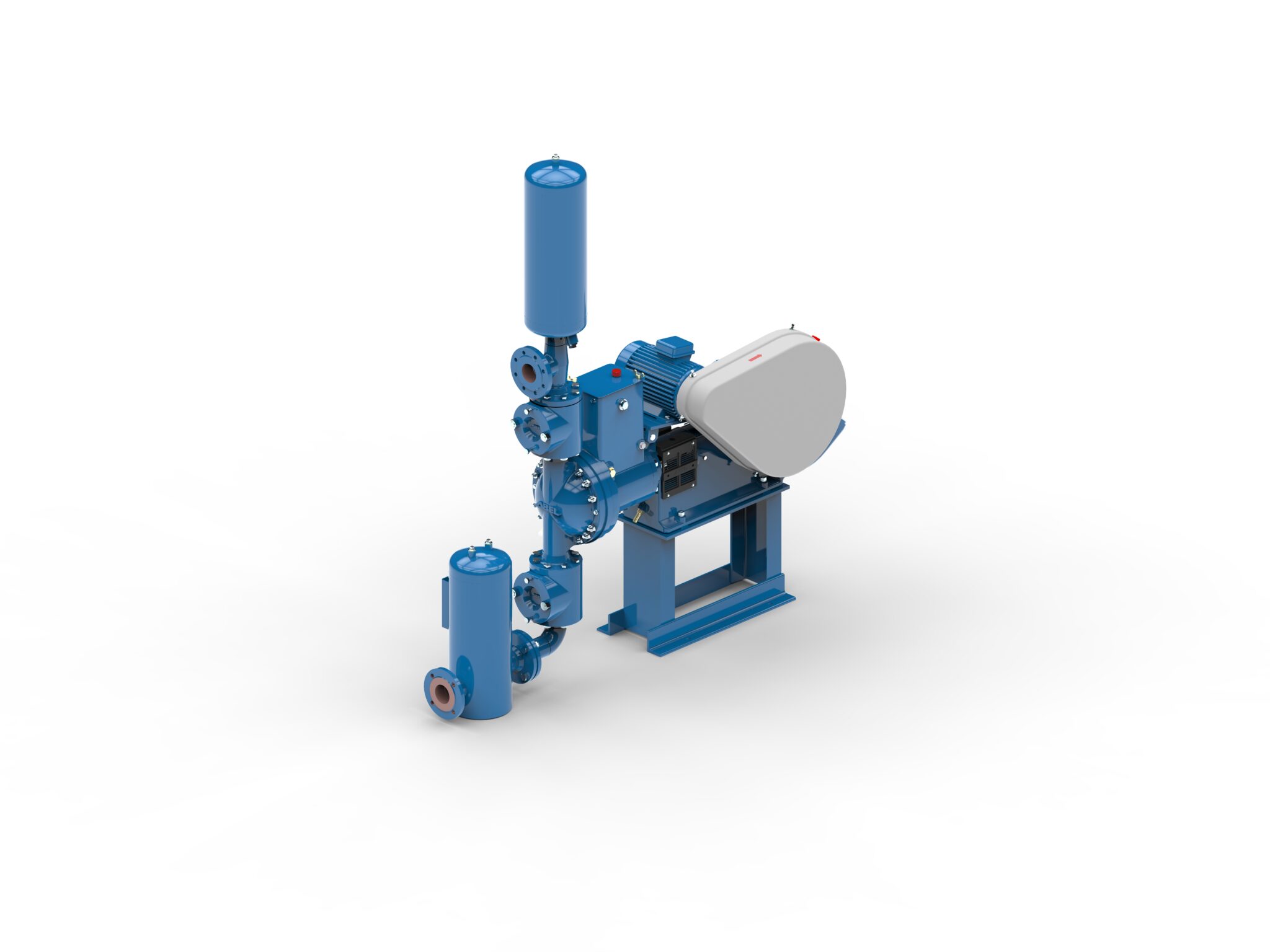
In various cement plants around the world, ABEL CM and HM piston diaphragm pumps are used to convey these alternative fuels into the rotary kilns. Due to the varying composition of the different oils and chemicals – which often cannot be precisely specified in advance – robust, reliable pumps are required. High flow accuracy and insensitivity to fluctuating viscosities and solids content are key features of these pumps. These pumps are also available in ATEX design. The use of electrically conductive plastics on the product side also allows for the special application scenario of an “Ex zone inside the pump.”
Pumps suitable for this application
Advantages of Piston Diaphragm Pumps for Rotary Kiln Feeding
- Intelligent pump monitoring with AI monitors pump health and enables predictive maintenance
- Low wear due to optimally matched diaphragm and valve materials
- High efficiency and thus low energy consumption
- ATEX-compliant design
- Adaptable to operating conditions via frequency control
ABEL Pumps - For Reliable and Energy-Efficient Incinerator Feeding